



Table of contents
Print on Demand (POD) allows entrepreneurs, artists, and creatives to monetize their imagination and build a passive income stream without the risk of losing money. The beauty of the print-on-demand business model lies in the fact that a trusted print provider takes care of the entire production process for you.
You're responsible for developing design ideas, marketing them to your target audience, and managing your online presence. Depending on how much time you're willing to invest, you can either earn some extra cash or build a full-time career and be your own boss.
In this guide, we'll walk you through how to make money with Print on Demand so you, too, can start making money online.
Valuable read: 10 Successful print-on-demand stores and what you can learn from them
What is Print on Demand?
Print on Demand, in simple terms, is a digital business model where products are created and printed only after a customer places an order. Understanding how Print on Demand works is key, because it's this on-demand production model that makes it such an attractive, low-risk way to start selling online.


Valuable read: What is Print-on-Demand? All Your Questions Answered
Now, on to the real question: can you make money with print-on-demand?
Earn money online with Print on Demand in 6 steps
While the POD business model doesn't guarantee overnight riches, it does offer a low-risk entry into eCommerce. There are plenty of print-on-demand success stories to get you inspired and committed to this journey. But it may take some time to start seeing results, so creating a solid plan and sticking to it is key.
Valuable read: 20 Critical Print-on-Demand Mistakes and How to Avoid Them
1. Come up with a business idea

A solid business idea consists of a clear audience and products that the audience wants or needs. Let's start with the audience, because your product lineup will depend on who you're selling to.
Defining a target audience ensures your efforts are directed toward people most likely to buy. It also helps when tailoring product designs, ads, and promotional strategies.
Here are five steps to guide you:
-
Do your market research: Look for trends, popular items, and customer feedback. Tools like Google Trends can help you spot what's gaining traction. This will help you understand what attracts buyers.
-
Define demographics: Determine your potential buyer's age, gender, income level, interests, and geographic location. This shapes your product designs and marketing strategies.
-
Analyze competitors: Examine their customers to identify potential gaps in the market.
-
Research customer interests and preferences: Identify interests, hobbies, or pain points that resonate with your potential audience. This could include pop culture, social causes, or specific hobbies.
-
Ask for feedback and adjust: Use surveys or social media engagement to gather feedback from existing and potential shoppers. Continuously adjust your approach based on this feedback to better reach your target market.
Once you have a clear audience, you can move on to deciding on your product lineup.
Valuable read: 23 Bestselling print-on-demand products
If you're looking for apparel products to sell, custom t-shirts and custom hoodies are two of the best-selling items year-round. If you plan on selling clothes, we've created a handy step-by-step guide for starting a clothing line. Check it out!
Another highly profitable category is home & living. You can design home essentials like towels, drinkware, and aprons, or statement pieces like wall art, throw pillows, and blankets.
2. Select your print-on-demand partner
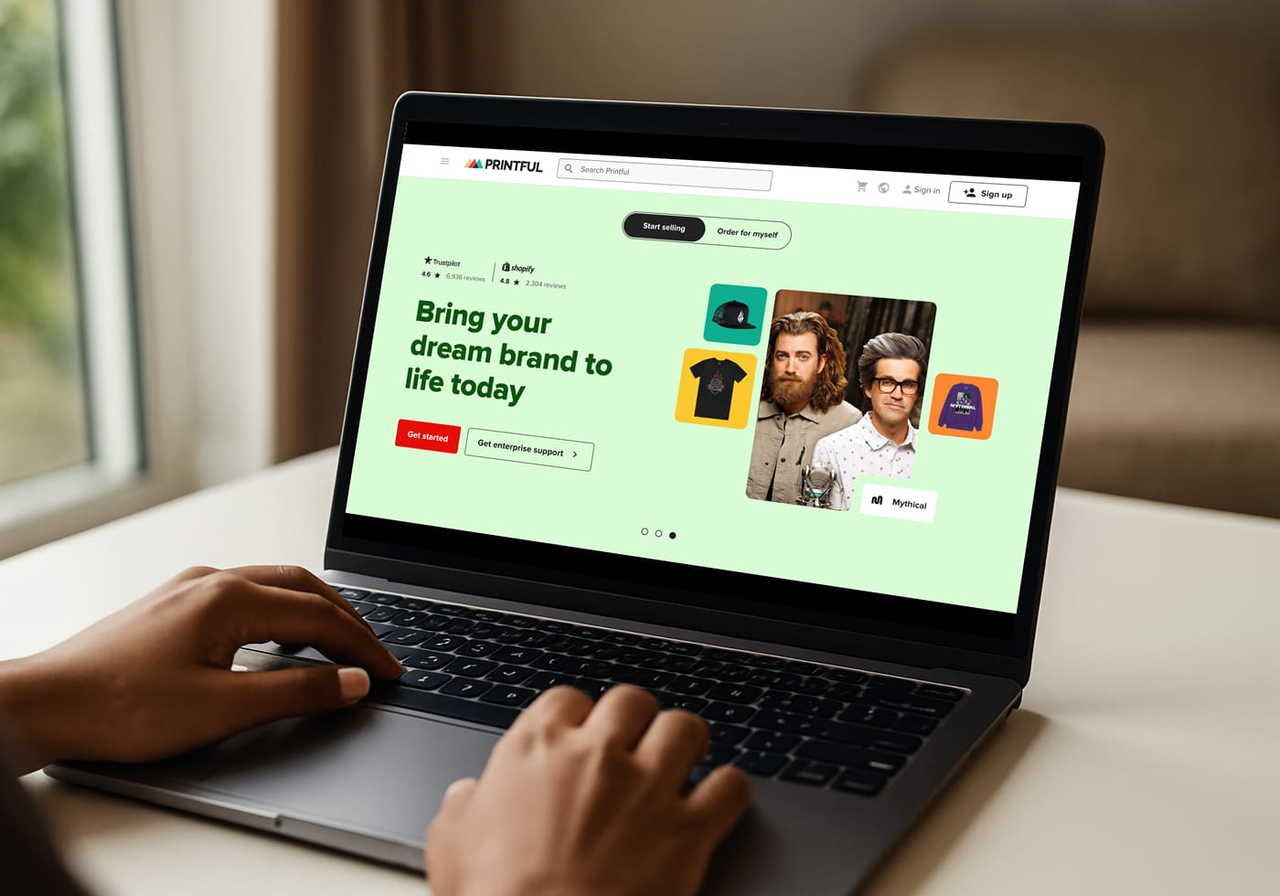
Selecting who you'll work with is the most important decision you'll make. After all, this choice will determine the quality of your products, your brand's reputation, and overall customer experience.
Valuable read: 10 Things to Look for in Every Print-on-Demand Service
When evaluating POD services, consider:
-
Features like automatic order forwarding to speed up the fulfillment process and minimize errors
-
Integrations and customization possibilities so you can manage product listings, set your pricing, and handle product variations
-
Analytics and reporting tools to access in-depth insights into sales trends and customer behavior


We've created a comprehensive resource to help you compare different print-on-demand providers.
Disclaimer: Please check the comparison page to get the latest, most up-to-date information.
Let's briefly touch on the key factors in choosing a POD service.
Product range and quality
Product quality and versatility should be at the top of your checklist when comparing demand companies. To ensure the longevity of your POD business, you want to sell customized products that your customers love and want to keep buying. A diverse product range lets you cater to various preferences and keeps your store fresh.
In addition to product quality, print quality matters just as much. So make sure to place order samples and see exactly what quality your customers will receive.
Fulfillment and delivery times
Efficient fulfillment and prompt delivery are crucial for customer satisfaction. Long wait times can deter customers from making repeat purchases. Examine the average fulfillment and shipping times, including shipping fees and shipping locations, of potential printing partners.
Also consider their location and distribution networks, as these can significantly affect delivery times and shipping costs.
Printful has a global network of fulfillment centers across multiple production locations, and 97.66% of orders are shipped within five business days. More than 50% of orders ship within 3 business days.
eCommerce platform and marketplace integrations
The compatibility between your POD service and your chosen ecommerce platform or marketplace is vital for streamlining order syncing and payment processing, so you don't have to manage them manually.
3. Design products
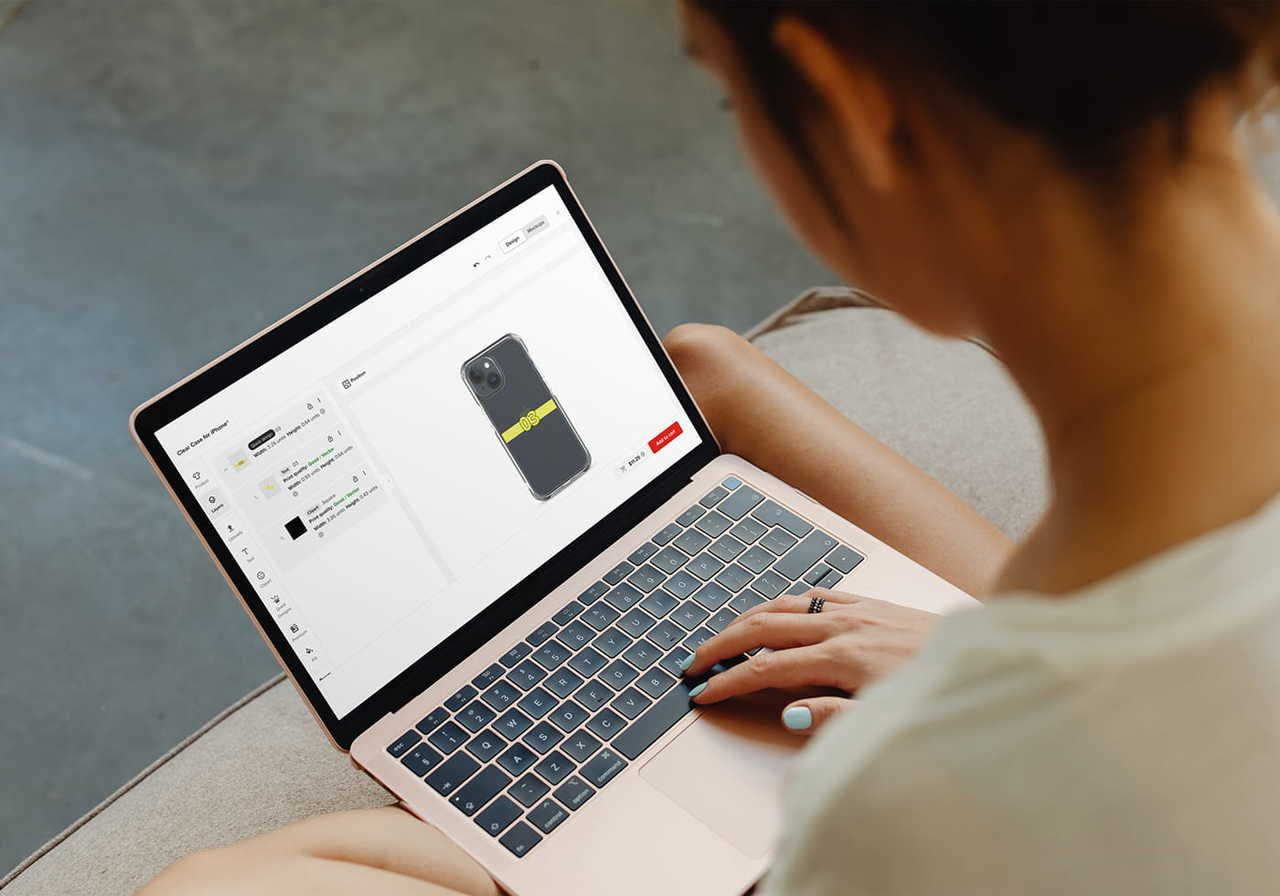
With Printful, you can put your custom design on hundreds of premium products. You can also access Printful's Design Maker, a free tool packed with ready-made, customizable tamplets, clipart collections, premium images, and more product creation tools to help you design quickly.
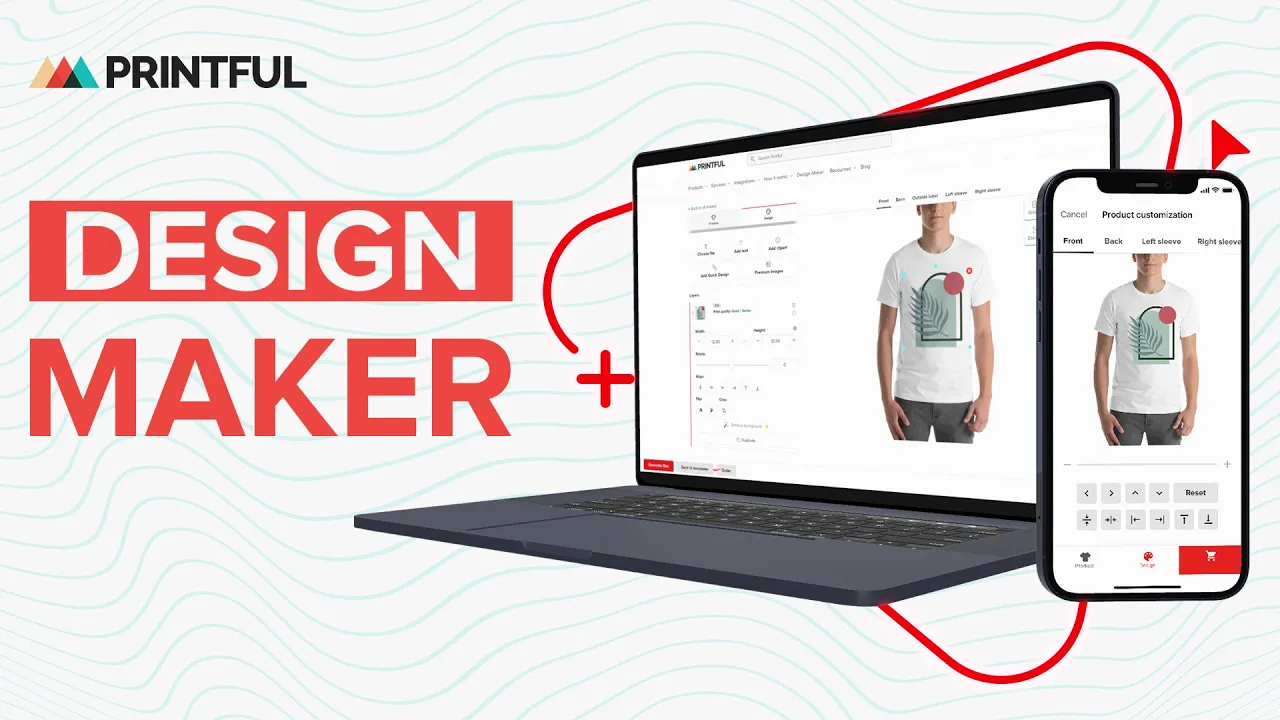
Here's an overview of what Printful's Design Maker can do:
-
Preview and download realistic mockups. Save time and money on photoshoots with 2,550+ polished product images.
-
Finalize the designs you've made elsewhere. Pick the perfect spot and size for your own image.
-
Find free clipart for every occasion. Start from scratch or put the finishing touch on your design with 20,496+ clipart graphics sorted by themes.
-
Compose eye-catching messages with 791+ fonts. Enhance your text with professional typography, shadows, and arcs.
-
Make seamless patterns for all-over print products. Don't waste hours piecing together patterns, all it takes is one click.
-
Add vibrant background colors and graphics. Pick from 668+ colors and patterns that guarantee high-quality, consistent prints.
-
Turn nearly-there images into crisp designs. Automatically upscale graphics that almost meet our printing requirements.
-
Choose from 110M+ Premium Images. Use ready-made images from partners Getty Images, Patternbank, and Vexels for just $1.
-
Add luxury to your designs with embroidery. Easily customize products with over 300 fonts and 3K+ visual graphics made for embroidery.
Alternatively, you can use dedicated design software. There are plenty of options on the market, but here are 3 of the best for different proficiency levels.
Valuable read: How to Create Designs for Print-on-Demand Even If You're Not a Designer
A beginner-friendly drag-and-drop design tool with a vast library of fonts, assets, and templates. Supports high-resolution exports for print.
Experience level: Little to no design experience
Price: Free basic version; premium plan from $120/year
A digital illustration app for iPad and iPhone with customizable brushes, high-resolution canvases, and features like real-time filters and animation.
Experience level: Artists and newer graphic designers
Price: $12.99 (iPad) / $4.99 (iPhone) one-time purchase.
A professional-grade design tool with advanced editing, layering, and AI-powered features. Powerful, but with a steep learning curve.
Experience level: Professional or experienced designers
Price: From $19.99/month
If none of these feel like the right fit, check out our guide on 12 design software options.
What you choose to put on your products will depend on your niche and your audience's preferences.
For design inspiration:
You can also outsource to a skilled graphic designer who can turn your ideas into polished custom designs.
Once you've created your visuals, apply them across different products to build matching collections. Diversifying your product range can open new revenue streams and attract a broader customer base.
4. Build an eCommerce store

You have two main options: build your own website or list your products on an existing ecommerce site. The choice depends on your business goals, resources, and how much control you want over your online presence.
The advantage of building your own online store is that you're not competing with other sellers for the shopper's attention. The downside? It requires technical know-how and a meaningful time and money investment. You're also responsible for driving all the traffic yourself, which means investing in marketing to build brand awareness and attract customers.
Established platforms come with built-in analytics, payment processing tools, and an easier setup process with a built-in audience. A 2024 study found that 48% of online shoppers globally turn to marketplaces as their primary source of inspiration, up from 35% in 2023.
That convenience does come with trade-offs, higher competition, fees, and platform rules.

Here are the key differences:
|
Feature |
eCommerce platforms (e.g., Shopify, Wix) |
Online marketplaces (e.g., Etsy, Amazon) |
|
Store structure |
Your store is built as a standalone website. |
Your store is an account on the marketplace's website. |
|
Traffic source |
Comes from your own marketing activities and external search engines (SEO). |
Driven by the marketplace's internal search engine, providing built-in traffic. |
|
Customization |
Greater freedom to personalize and brand your store exactly as you see fit. |
Limited options for personalization; layout is determined by the marketplace. |
|
Payments |
Payment processing is set up separately (usually via apps or platform add-ons). |
Most marketplaces offer built-in payment processing for ease of use. |
|
Primary goal |
Ideal for sellers looking to grow and own their own brand long-term. |
Ideal for sellers who want to start quickly on a pre-established platform. |
Printful integrates with multiple platforms and marketplaces. The setup process and brand customization available depend on the type of integration you choose.
eCommerce platforms
An ecommerce platform is a software solution that lets businesses create their own store. It provides the tools to build a standalone website or customize an existing template, giving you complete control over your own store's look, feel, and functionality.
Valuable read: Best eCommerce Platforms: Top 11 Contenders
eCommerce marketplaces
An eCommerce marketplace is an online platform that hosts multiple third-party sellers in one place, like a digital shopping mall. Customers can browse and buy from different sellers, but transactions are processed through the marketplace. The trade-off is less control over branding and customer experience, and stiffer competition from other vendors.
Valuable read: Top 10 Best Online Marketplaces for Print-on-Demand Sellers
5. Promote your store

Effective promotion is essential to make money with print-on-demand. Since people don't like being sold to, we recommend building a genuine relationship with your customer base to drive ongoing growth.
Here are some effective marketing strategies to try:
Social media followers want to know your brand, not just see products. Post behind-the-scenes content and customer testimonials to build a community. Genuine engagement fosters loyalty and encourages word-of-mouth referrals.

Paid ads on platforms like Facebook, Instagram, and Pinterest can be highly effective for reaching specific audiences and boosting brand visibility with measurable results. Paid advertising, when done right, delivers an excellent return on investment.
Pro tip: Use advanced targeting options to reach potential customers based on their interests and behaviors.

Influencer collaborations can expand your reach and add credibility to your brand when you partner with trusted voices in your niche.
Valuable read: 5 Steps for Running the Perfect Microinfluencer Campaign
Email marketing offers targeted messaging, measurable results, a high ROI, and the ability to build lasting customer relationships. Keep your audience informed about new products, offers, and promotions.

Valuable read: How to Increase Your Email Open Rate
6. Keep creating listings
Regularly analyze the performance of your existing products across every demand platform and site you use. Identify bestsellers and seek customer feedback to understand what's working. Use this data to refine your offerings and keep them relevant.
To achieve the ideal product, design, and audience fit, consistently iterate your listings:
-
Create new listings and update existing ones
-
Schedule regular updates based on customer feedback and sales data
-
Experiment with different designs or features to see what resonates
-
Remove underperforming items and double down on bestsellers
This hands-on approach helps you stay aligned with market trends and customer needs.
Valuable read: 10 Effective Ways How to Market a Product
Print on Demand: Pros and Cons
Knowing what you're signing up for is the best way to set yourself up for success. Let's look at the key advantages and disadvantages of the POD model.
|
Feature |
Pros |
Cons |
|
Financials |
Minimal upfront costs: Eliminates the initial financial barrier to starting a business. |
Lower profit margins: Higher per-unit costs compared to bulk manufacturing can slow income growth. |
|
Logistics |
No inventory: Fulfillment and shipping are handled by partners, reducing overhead and unsold stock risk. |
Limited quality control: Third-party fulfillment means less oversight on product quality and shipping speed. |
|
Operations |
Uncapped scalability: Production scales with demand without needing physical space or extra investment. |
High competition: Low barrier to entry requires standout designs and heavy marketing to succeed. |
|
Strategy |
Creative freedom: Flexibility to design products that align with your specific artistic vision or niche. |
|
|
Market |
Global reach: Ship worldwide easily without managing complex international logistics yourself. |
Valuable reads:
Guide to Launch Your Online Store With No Money
Printful’s Service and Product Quality
How to Develop an Effective Marketing Strategy
How long does it take to turn a profit with Print on Demand?

How much money you can make with Print on Demand depends on several factors. As with any online business, success doesn't happen overnight. Here's what influences your timeline to profitability:
-
Initial setup and learning curve. Setting up your ecommerce store, selecting products on your chosen demand platform, and creating designs all take time. The early phase involves testing POD services, researching your target market, and building out your own website or store.
-
Marketing and customer acquisition. Building your brand and attracting customers are among the most time-consuming parts of any online business. Your marketing efforts, social media, email campaigns, and paid advertising across multiple platforms will heavily influence sales volume.
-
Product quality. Regardless of your marketing tactics or pricing strategy, product quality determines long-term success. High-quality products lead to satisfied customers, positive reviews, and repeat business.
-
Pricing strategy. Your competitive pricing must cover costs while delivering a reasonable profit margin. Here's a video on how to correctly price your POD products.
-
Competition and market trends. The POD model lets you stay flexible and agile. Staying ahead of trends can dictate how quickly you attract and retain customers.
It might take several months to a year to see consistent profit, though if everything clicks, results can come faster. Set realistic goals and be prepared to invest time and effort before expecting significant returns. Continuous learning and optimizing your approach are key.
"Really consider using print-on-demand because most people, when they start a business, they're gonna start a clothing brand. They usually don't have a lot of money, and you think you know what you're doing . . . You buy 200 t-shirts, and then only five people buy them. Your capital is gone. If you don't use print-on-demand and your brand scales immediately, you won't be able to keep up with the sales and orders." — Ryan, founder of UMAI Clothing.
You're ready! Best of luck
You've made it to the end. That means you now have the tools and resources to start and grow your print-on-demand business. Well done!
Set clear, realistic goals, keep experimenting, and stay consistent. The results will follow.
Valuable read: The Ultimate 2026 Ecommerce Holiday Calendar
Frequently asked questions
When it comes to print-on-demand products, apparel is king. Custom t-shirts and hoodies are perennial bestsellers that work across virtually every niche, and if you want to sell t-shirts, POD is one of the easiest ways to get started. Beyond clothing, phone cases, mugs, tote bags, and wall art are also strong performers. The real secret, though, is pairing the right custom-designed products with a specific, well-defined audience. That's what turns casual browsers into loyal buyers.
Nope, you can get started as a sole proprietor! Many sellers launch their POD business without any formal business structure and do just fine. That said, forming an LLC can offer useful liability protection as your business grows and your revenue increases. When in doubt, a quick chat with a local accountant or business advisor will point you in the right direction.
Pretty much, yes! One of the biggest advantages of the demand model is that it removes the traditional barriers to starting a business. There's no need to invest in stock upfront, worry about managing inventory, or deal with complex shipping logistics. Your print partner handles all of that. You can sign up with Printful for free, design your products using free tools like Canva or Printful's Design Maker, and list on a marketplace at no cost. You only pay production and shipping costs when you make a sale.
It really depends on how much effort you put in! If you're wondering how to make money with Printful or any other POD platform, the answer is the same: consistency and strategy. Sellers who research their niche, sell custom products with broad appeal, choose reliable pod companies, and stay consistent with their marketing tend to see the best results. Think of it less like a lottery and more like any other small business; the more intentional you are, the better your chances.

Chan is a copywriter, creative writer, and technical writer with 15 years of experience creating everything from training courses to compelling marketing copy. A self-confessed research nerd, she loves digging deep into a subject and bringing it to life on the page. When she’s not writing, she’s exploring forest trails or walking the beach with her dog, or in the kitchen experimenting with homemade pickles and jams.

